
The Real Cost of Fitting Out a Pilates or Reformer Studio in Australia - And What Franchise Owners Need to Know Before They Sign
0If you’re about to launch a Pilates or Reformer franchise, you’ve probably asked the question every new franchisee asks:
“How much is this actually going to cost me?”
It’s a fair question – and the honest answer is more layered than most expect.
Because fitting out a Pilates or Reformer studio isn’t just about flooring, mirrors and machines. It’s about compliance, services capacity, acoustics, branding, programming, approvals, and ultimately one thing:
How quickly you can open your doors and start generating revenue.
For franchise owners and first-time franchisees entering the gym and wellness sector, understanding where your money goes – and where hidden costs can creep in – is the difference between controlled investment and commercial stress.
Let’s unpack it properly.
The Short Answer: What Does a Pilates Studio Fitout Cost in Australia?
For a typical Pilates or Reformer franchise studio in Australia, you can expect:
- $1,200 – $2,500 per sqm for base fitout works
- $1,500 – $5,000+ per reformer bed (depending on brand and specification)
- $350,000 – $800,000+ total project cost for a 150-300sqm studio
That total range depends on:
- Location (CBD vs suburban strip vs shopping centre)
- Existing services capacity
- Landlord contributions
- Franchise brand requirements
- Acoustic and compliance upgrades
- Amenities requirements
- Level of finishes and experience design
But numbers alone don’t tell the full story.
Because the real cost isn’t just construction.
It’s timing, sequencing and risk management.
Why Pilates & Reformer Studios Aren’t “Light Commercial” Fitouts
From the outside, a Pilates studio looks simple.
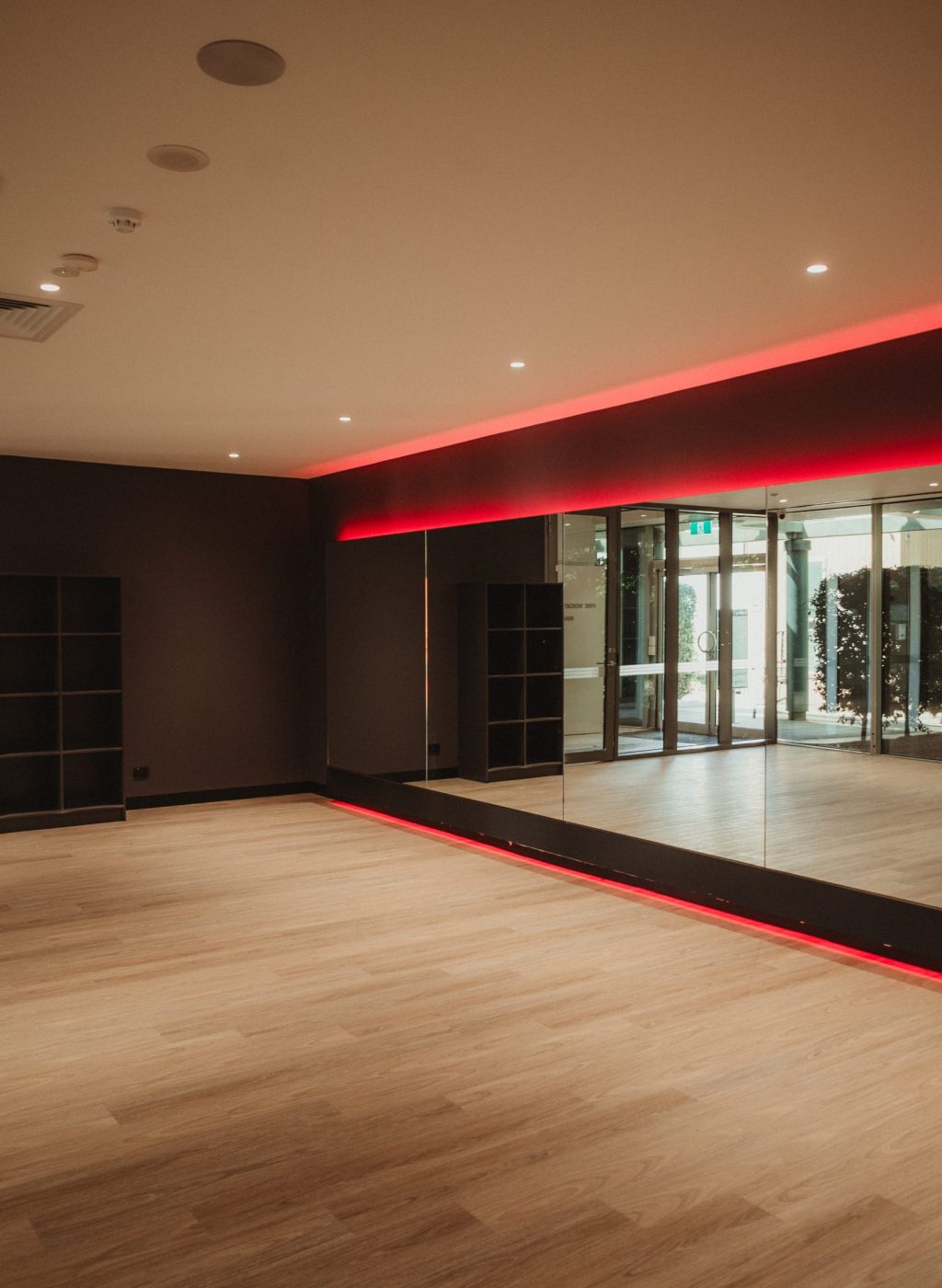
Open room. Timber floors. Mirrors. Calm lighting.
But behind the walls, these spaces behave more like boutique gyms.
They require:
- Significant electrical upgrades
- Mechanical ventilation suited to group exercise
- Acoustic treatment for impact and music
- Structural assessment for equipment loads
- Fire compliance and disability access upgrades
- Plumbing for amenities (often including showers)
If you assume it’s a “standard retail conversion”, you may under-budget – and delays can follow.
For franchisees especially, that’s where unknown costs begin to surface mid-project.Breaking Down the Budget: Where the Money Actually Goes
Let’s break a typical Pilates/Reformer fitout into key cost categories.
- Base Building & Construction Works (30-40%)
This includes:
- Demolition
- Partition walls
- Flooring systems (often impact-resistant)
- Ceilings
- Painting
- Joinery
- Reception desk
- Change rooms & bathrooms
- Accessibility compliance upgrades
The condition of your tenancy matters enormously here. A cold shell will cost more than a previous gym conversion.
- Services & Infrastructure (15-25%)
This is where many franchisees underestimate cost.
Includes:
- Electrical upgrades & switchboard works
- Feature lighting
- Emergency & exit lighting
- Mechanical ventilation or HVAC upgrades
- Data & AV infrastructure
- Security systems
- Plumbing & hot water systems
If your site doesn’t have adequate power or ventilation, you may need significant upgrades – particularly in older retail strips.
- Reformer Equipment & Installation (20-35%)
Reformer beds are a major capital component.
Costs vary depending on:
- Brand specification (often dictated by franchise)
- Freight
- Installation requirements
- Storage systems
- Access challenges (stairs, lifts, restricted entries)
For a 12-16 bed studio, equipment alone can represent $120,000-$250,000+.
And installation must be carefully sequenced within the construction programme.
- Branding & Experience Layer (5-10%)
Franchise consistency matters.
Costs may include:
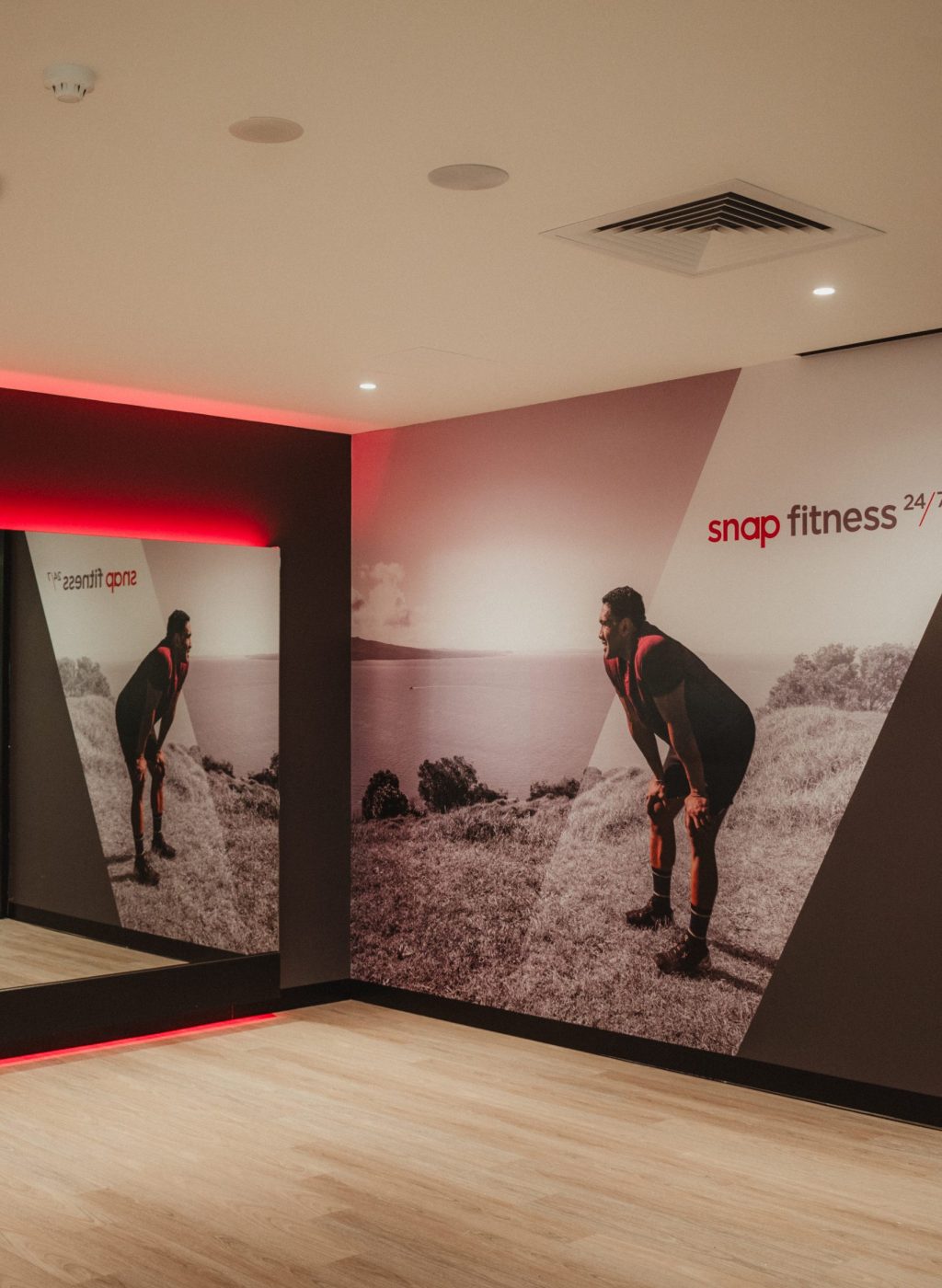
- Branded wall finishes
- Signage (internal & external)
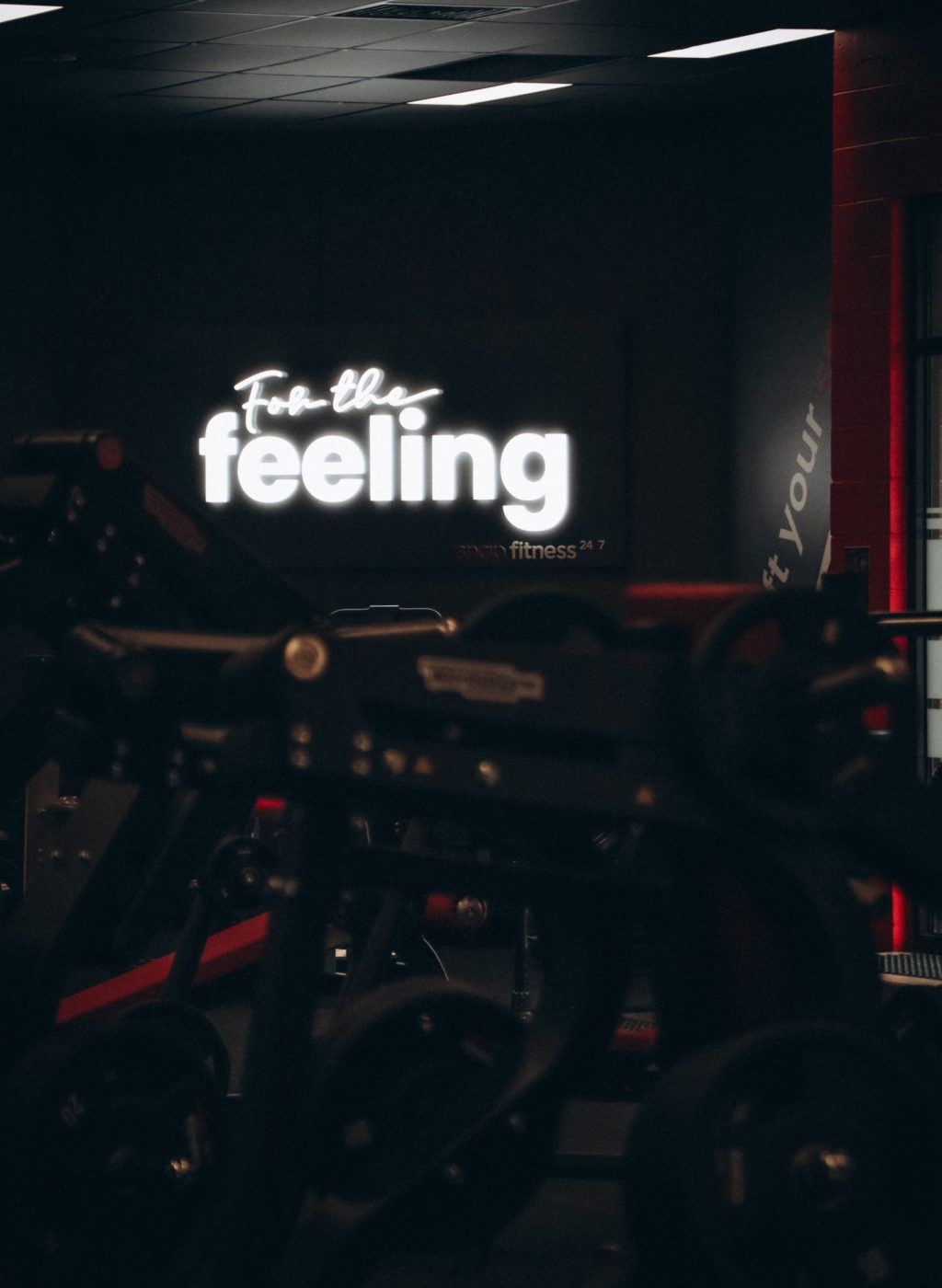
- Feature lighting design
- Wayfinding
- Digital screens
- Acoustic panels
This is where your space transforms from “fitout” to “brand experience”.
- Professional Fees & Approvals (8-15%)
Often overlooked in early budgets:
- Design documentation
- Engineering (structural, mechanical, hydraulic, electrical)
- Building permits
- Certification
- Acoustic reports
- Fire engineering (if required)
- Project management
These are essential – not optional – and should be accounted for from day one.
The Costs You Don't See Coming (Until You Do)
The biggest financial risks for franchisees usually aren’t material upgrades.
They’re programme delays.
Delays mean:
- Rent payable before trading
- Equipment finance activated before opening
- Staff onboarding without revenue
- Marketing campaigns launched without a firm opening date
One unexpected electrical upgrade or acoustic redesign can push completion by weeks.
And every week lost pushes your revenue start date further out.
Location: The Silent Multiplier
Where you choose to open will influence cost significantly.
Shopping Centres
- Often higher compliance standards
- Strict landlord design requirements
- After-hours construction constraints
- Potential higher base building quality
High Street Retail
- Older services infrastructure
- Possible power or sewer limitations
- Structural unknowns
Industrial Conversions
- Larger floorplates
- Potentially lower rent
- But significant services upgrades may be required
The cheapest rent does not always equal the cheapest fitout.
Smart franchisees evaluate both together.

Franchise Guidelines vs Real-World Conditions
Franchise brands provide detailed design manuals.
But those manuals are often created for ideal conditions.
Real tenancies are rarely ideal.
Common challenges include:
- Columns interfering with reformer layouts
- Insufficient ceiling heights
- Services that don’t align with equipment placement
- Fire exit travel distance conflicts
If brand requirements are not reconciled early with site realities, redesign costs follow.
That’s where experience matters.
Why Delivery Structure Impacts Your Total Investment
Many franchisees assume the process is linear:
Designer → Engineers → Builder → Equipment install.
In reality, every handover between parties introduces risk.
- Design intent gets reinterpreted
- Services may be validated late
- Equipment coordination becomes reactive
- Compliance checks surface mid-build
These aren’t catastrophic failures.
They’re small pauses.
But small pauses extend your programme.
And extended programmes increase holding costs.

The Commercial Lens: Fitout Cost vs Speed to Trade
Let’s say your studio projects:
- 250 members within 3 months
- $55 average weekly membership
- Plus retail and class revenue
A 3-week delay could defer tens of thousands in revenue.
So the real question becomes:
Is the lowest construction quote truly the lowest total cost?
Or does programme certainty protect your ROI more effectively?
Experienced franchise owners think in terms of:
- Opening date certainty
- Reduced redesign risk
- Coordinated equipment integration
- Early validation of services
Because accelerating trading improves cash flow far more than shaving a small percentage off construction cost.
What Smart Franchisees Do Differently
The most successful Pilates and Reformer franchisees:
- Validate services capacity before signing leases
- Confirm landlord contributions early
- Align design with construction from day one
- Plan equipment integration early in documentation
- Map approvals before build starts
- Build contingencies into programme and budget
They understand that certainty reduces financial pressure.
And certainty comes from alignment – not guesswork.
So, What Should You Budget?
For planning purposes:
- Allow $400,000-$700,000+ for a well-executed 150-250sqm franchise studio
- Add contingency (5-10%)
- Factor in rent-free negotiation periods
- Model your cash flow against conservative opening dates
Most importantly:
Budget for strategy, not just construction.
Because your studio isn’t simply a space.
It’s a revenue engine.
Opening Sooner Is Often More Valuable Than Building Cheaper
The unknowns in a Pilates fitout aren’t always visible at the beginning.
But they’re manageable – with the right structure.
When strategy, design and construction are aligned early:
- Services are validated before design lock-in
- Equipment is coordinated from the outset
- Compliance is anticipated
- Programme sequencing is protected
And that means one thing:
You open sooner.
For franchise owners and franchisees starting their wellness journey, clarity removes risk.
And removing risk protects ROI.
Because the real cost of fitting out a Pilates or Reformer studio in Australia isn’t just measured in dollars per square metre.
It’s measured in how quickly members walk through the door.
And how confidently you step into trading day one.